
# 10 Powerful Benefits for a Healthier Life Through Yoga
Discover the benefits of yoga for physical and mental health by learning how yoga can improve flexibility, strength, stress, sleep, focus, and overall well-being. So, let’s discuss: have you ever completed a yoga session and observed that your body feels lighter and your mind feels somewhat calmer? That sensation is one of the reasons why millions of people worldwide have incorporated yoga into their daily routines.
As a Yoga Trainer, I mean that yoga is about more than just stretching or holding challenging poses. It combines movement, breathing, mindfulness, and relaxation. With consistent practice, yoga can become a straightforward way to better care for both your body and your mind. Today, yoga is also being examined through scientific research. The World Health Organization also states that yoga can promote physical and mental health.
Yoga for Physical and Mental Health: Holistic Benefits
Come along as we explore the physical and mental advantages of yoga and how a consistent practice can positively impact everyday life. Based on my past experience, if we have sufficient time, practicing meditation alongside yoga can be very beneficial. It brings inner peace and helps you connect with something greater than yourself, which is divinity.
Let’s find out what yoga is all about.
India is where the ancient discipline of yoga originated. Strength and flexibility can be developed through this mental and physical exercise. It might also lessen stress and aid with pain management. Many forms of yoga incorporate breathing exercises, physical postures, meditation and also mindful awareness. One of the wonderful aspects of yoga is that it doesn’t need to be the same for everyone. A beginner might start with basic stretches and breathing exercises, whereas an experienced practitioner might opt for more demanding postures. Yoga can also be tailored to different ages and physical capabilities. The aim is not to compete with the person next to you. The aim is to understand your own body, improve your breathing, and foster a healthier relationship between your body and mind.
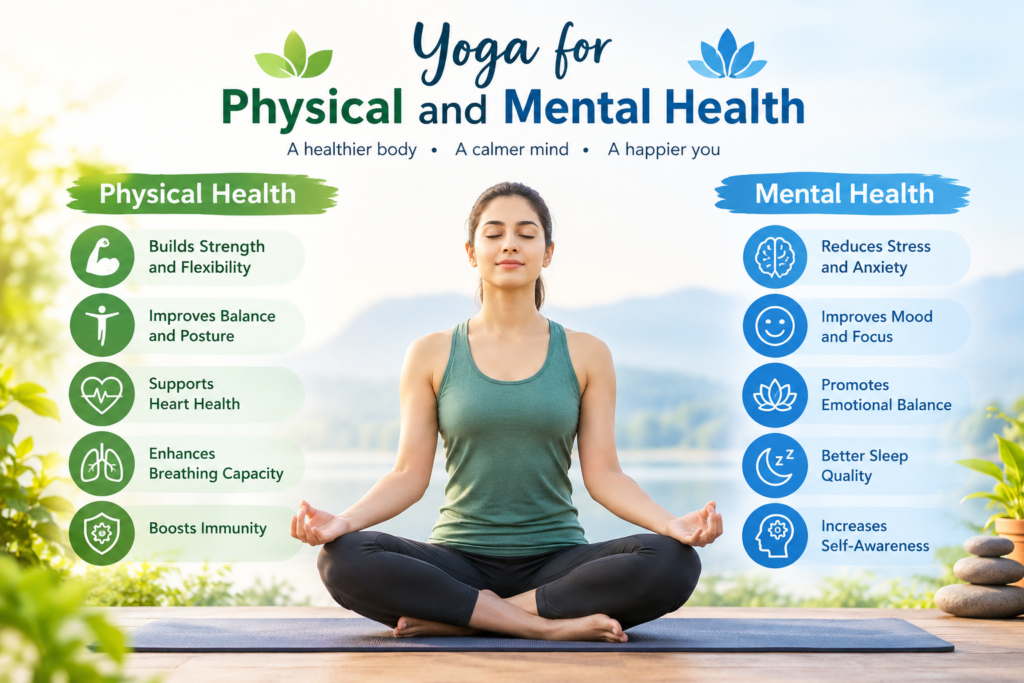
Yoga may appear gentle, but regular practice can offer a substantial physical workout. Depending on the style and intensity, yoga can engage your muscles, enhance mobility, and increase your awareness of posture and movement.

Enhances Flexibility
For many newcomers, one of the most evident advantages of yoga for physical and mental health is greater flexibility. Engaging in regular yoga practice involves stretching and moving various parts of the body through controlled motions. With time, this can enable you to move with more ease and gain increased flexibility. There is no requirement to be flexible before you start yoga. Through patience and steady practice, your body can gradually adapt to movements that previously seemed challenging. This flexibility helps us a lot as we grow older.
Helps Build Strength
Yoga is not solely about flexibility. Many yoga postures require you to support and control your own body weight. Asanas like plank, chair pose, and warrior variations can activate different muscle groups. Depending on the yoga style you follow, consistent sessions can enhance muscular strength and overall physical fitness. WHO also points to strength, mobility, and balance as areas where yoga can aid healthy aging.
Supports Better Balance and Coordination
Balance grows increasingly important as we age. Yoga which includes standing and balancing poses that prompt you to concentrate on stability, body awareness, and controlled movement. Even basic balance exercises can instruct you to slow down and be mindful of your body’s positioning. This awareness can transfer to daily tasks such as walking, climbing stairs, or simply keeping good posture.
Supports Better Posture
Extended periods at a desk, using a phone, or staying in one position can leave many individuals feeling stiff. Yoga fosters awareness of the spine, shoulders, hips, and general body alignment. A regular routine may help you become more mindful of your posture and how you move. The advantage isn’t solely about appearing more upright. Greater body awareness can assist you in recognizing when you’re slouching, holding tension, or sitting in an uncomfortable position.
Mobility and Healthy Movement
Yoga integrates controlled motion, stretching, balance, and breathing techniques. This makes it a valuable form of exercise for individuals aiming to stay active and flexible. The World Health Organization’s recent discussion on yoga and healthy aging emphasizes its possible contribution to maintaining flexibility, strength, balance, and mobility.
Yoga for Physical and Mental Health Supports Better Sleep
A hectic day doesn’t always conclude when you climb into bed. Occasionally, the body feels tired while the mind continues to process tomorrow’s plans. Yoga and relaxation techniques offer benefits of yoga for physical and mental health, which may contribute to improved sleep by fostering relaxation and lowering stress levels. Research compiled by the U.S. National Center for Complementary and Integrative Health (NCCIH) also points to sleep and stress management as areas where yoga could support overall wellness.
Helps Reduce Everyday Stress
Work, studies, family duties, traffic, deadlines, and social media can overwhelm the mind. Work, studies, family duties, traffic, deadlines, and social media can overwhelm the mind. And at times, even 20 or 30 minutes of quiet practice can seem like hitting a small reset button.
Supports Mental and Emotional Well-Being
Yoga is not a substitute for professional mental health treatment, but it can serve as a beneficial element of a healthy lifestyle. Studies indicate that yoga may positively influence physical, mental and also emotional well-being. WHO has also recognized yoga’s potential in aiding stress relief and emotional stability. The blend of movement, breathing, and mindfulness helps you become more conscious of your emotions rather than just hurrying through the day.
Yoga for Physical and Mental Health and Mindfulness
How often do you eat while looking at your phone, or work while thinking about five other things at once? Yoga encourages the opposite approach. When you are holding a posture and focusing on your breathing, you must remain in the present moment. Over time, this habit of paying attention can help cultivate greater mindfulness and awareness of your body.
More Relaxed Approach to Daily Life
Yoga does not mean that stressful situations will simply disappear. Your workload will still be there. Some days will still be challenging. A consistent practice can offer you a few moments each day to slow down, breathe, and reconnect with yourself. That small habit can become surprisingly valuable for our mental health and overall well-being.
Finally, yoga is not about forcing your body into difficult poses or trying to become extremely flexible. It is about building a healthier relationship with your body and mind. The benefits of yoga for physical and mental health can include improved flexibility, strength, balance, and mobility, along with better stress management, mindfulness, and emotional well-being.
Research and current health guidance suggest that yoga can be a valuable part of an active and healthy lifestyle. But perhaps the most meaningful benefit is simpler: when we learn to move with awareness, breathe more consciously, and give ourselves time to improve, positive changes can naturally follow—both on and off the yoga mat.